Healthy conflict is the conduit to a culture of innovation. Clear, rules of engagement keep it positive.
Conflict management is the process of balancing the positive aspects that can be achieved through conflict while reducing the negative effects of conflict. The instance of conflict is of course, greatly reduced by having clear, well communicated and accepted rules of engagement. This gives employees a foundation on which to operate especially when team members are under pressure, tired or stressed.
It has been argued that efficient teams are the sum of individuals with diverse work styles. This will naturally create differing points of view and develop a tendency for conflict. When managed expertly with mutually accepted ground rules, conflict creates a learning environment. It can lead to positive results such as ideation, innovation, procedural change and the implementation of ideas.
The flip side to this, is a lawless environment with no mutually accepted cultural rule book. This leads to people being spoken down to, having their ideas dismissed or being spoken to in an offensive manner with personalised threatening language. Typically sub groups will form and a war-like environment ensures. Overtime this will lead to silo mentality and stagnation due to fear of conflict and blame.
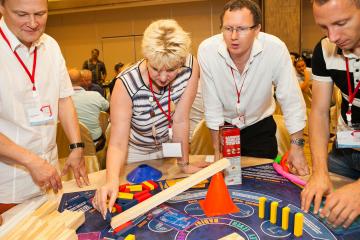
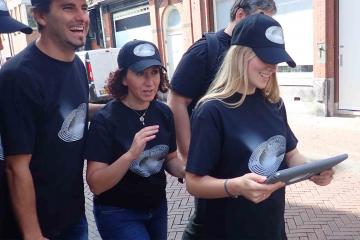
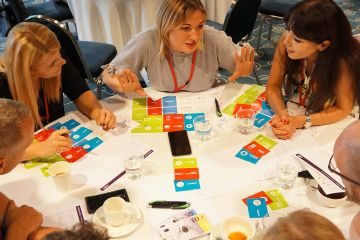
Specific experiential learning team building games simulate an environment of unhealthy conflict. Gamification provides a safe environment for analysing the rules of engagement and conflict management. Well designed and delivered games bring a realisation of the value of conflict, something to be embraced as a framework for developing a culture of innovation. Furthermore, the observation of such a program gives insightful business leaders opportunity to contemplate the underlying reasons for unhealthy conflict or lack of conflict and reassess company culture.
Look at this selection of related popular programs. Need help in deciding? Looking for something else?