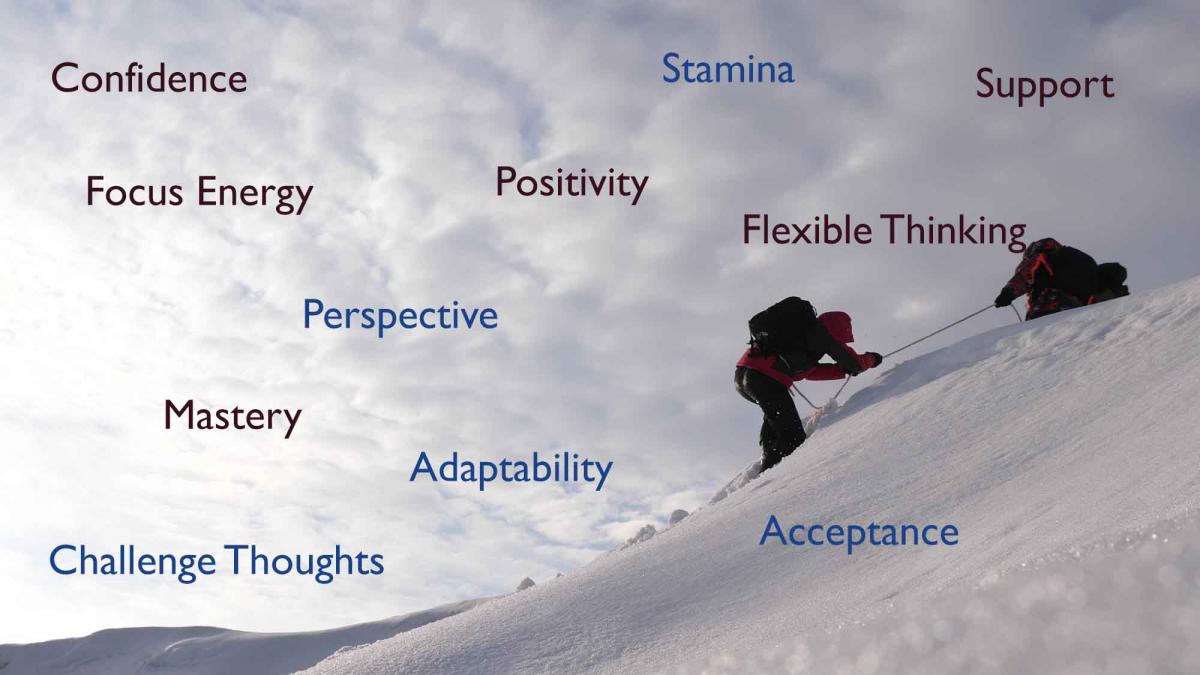
Resilience is the ability to recover and carry on when things don't go as expected.
Resilience is the ability to recover and carry on when things don't go as expected. Whether a setback results from inefficient planning or situations out of our control, learning how to deal with difficult situations and grow from a less than positive experience keeps us reaching our goals.
One of the first steps in building resilience is acknowledging the situation and how you feel about it. From there, you can develop strategies to assist you in dealing with unplanned situations when they arise again.
Realising that things don't always go as planned will help you in reframing minor hiccups and mistakes. Learn to face unexpected head-on and view it as a place of learning and growth. If something occurs that you forgot to plan for, you won't forget it next time! We aren't all be good at everything! Acknowledge your strengths and achievements and view adversity as a way to develop further. This will help you build positivity and optimism.
It's important not to waste time and energy blaming others for what occurred. Focus on what you can control and remain optimistic about moving forward.
Viewing the unexpected as a temporary setback, not a permanent state will enable you to be resilient. It is also essential to be passionate and committed to your end goal as this will help you drive on through hiccups along the way.
It's important for team leaders to develop thought awareness, positive thinking and self-confidence in each individual. Encourage the team not to personalise setbacks and not to apply blame. Instead, drive focus towards a solution and the learnings.
Organising opportunities for team members to develop strong relationships and foster empathy towards each other will build reliance and encourage them to work together to overcome obstacles.
Look at this selection of related popular programs. Need help in deciding? Looking for something else?